
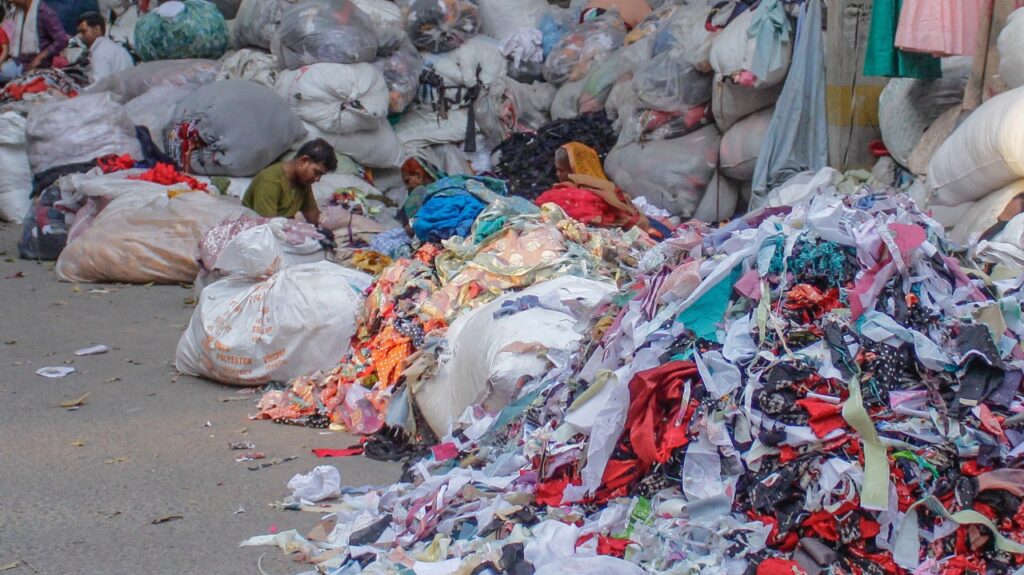
Textile waste management has become one of fashion industry’s largest blind spots. Every year, the fashion industry discards $120 billion in textile waste — materials that should have stayed in the value chain.
Instead, they are burned or buried, taking margin, materials, and opportunity with them.
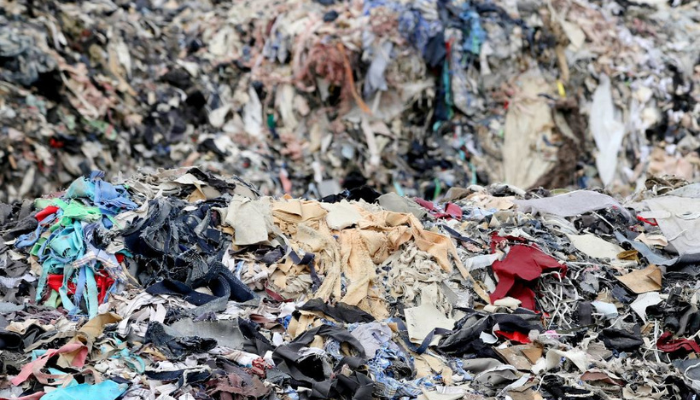
The Hidden Cost of Fashion’s Waste Loop
Every unused roll of fabric represents more than lost revenue.
It represents wasted labor, stranded capital, operational inefficiency, and eroded trust.
In order to dodge delays brands over-order, but that “safety stock” soon becomes deadstock. And while trends shift overnight, those rolls gather dust.
Likewise, even before finished garments reach shelves,
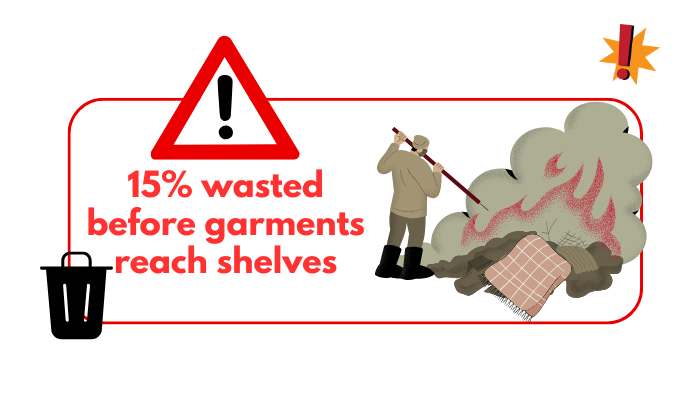
- 15% of textiles are wasted
- 92 million tons of fabric are dumped or burned annually which is equivalent to one garbage truck of fabric every second and,
- Less than 1% finds its way back into new garments.
This isn’t just environmental loss. It’s an operational system failure normalized as standard practice.
Why the Old Fixes Fail
Most brands still approach textile waste management reactively rather than strategically:
- Warehousing postpones loss but inflates costs
- Discounting moves stock but erodes margins
- Exporting leftovers undercuts brand equity
- Destruction is now a reputational and compliance risk
The linear “make–use–dump” model has reached its ceiling.
Fashion cannot burn, bury, or discount its way to profitability anymore.
Regulations Are Catching Up
Governments are tightening the rules. Effective textile waste management is becoming a financial requirement as regulations tighten:
- France has banned the destruction of unsold textiles
- EU EPR laws will make brands responsible for textile waste
- The UK and US are moving toward stricter compliance standards
Ignoring waste will soon cost more than addressing it.
Consumers And Investors Expect Better
Buyers have grown selective. Nearly 70% of Gen Z say they prefer sustainable brands. In fact, the resale market now grows five times faster than fast fashion. At the same time, investors demand transparency and traceable supply chains. Therefore, sustainability is now a balance-sheet priority, not just PR.
The Real Fix: Build a Circular Supply Chain
Brands that recover and repurpose their waste gain agility, stronger margins, and better resilience.
Leaders are now investing in textile waste management to recover materials before they become liabilities by taking these steps:
- Recovering pre-consumer waste through specialized partners
- Reworking deadstock into limited-edition or capsule collections
- Designing for recyclability with better materials and modular construction
- Digitizing production with AI forecasting and blockchain tracking
Each of these steps turns liability into leverage.
Waste Is the New Raw Material
Think about it — waste is just mis-allocated material. The brands leading the next decade won’t be the ones with the flashiest campaigns. They’ll be the ones closing the loop — extracting value from every thread, every scrap, every stitch.
Our team helps brands do exactly that through:
- Pre-consumer waste collection & sorting
- Textile-to-textile recycled fabric & yarn sourcing
- Upcycling solutions
- AI-driven waste reduction in the supply chain
Lead or Lag
The pressure from regulators, consumers, and investors is clear. Brands now face a simple choice:
Act now and save margin, or wait and pay higher costs later.
In short, waste is profit left on the cutting-room floor.
So, will your brand turn waste into value?
Or will you keep paying the landfill tax?