
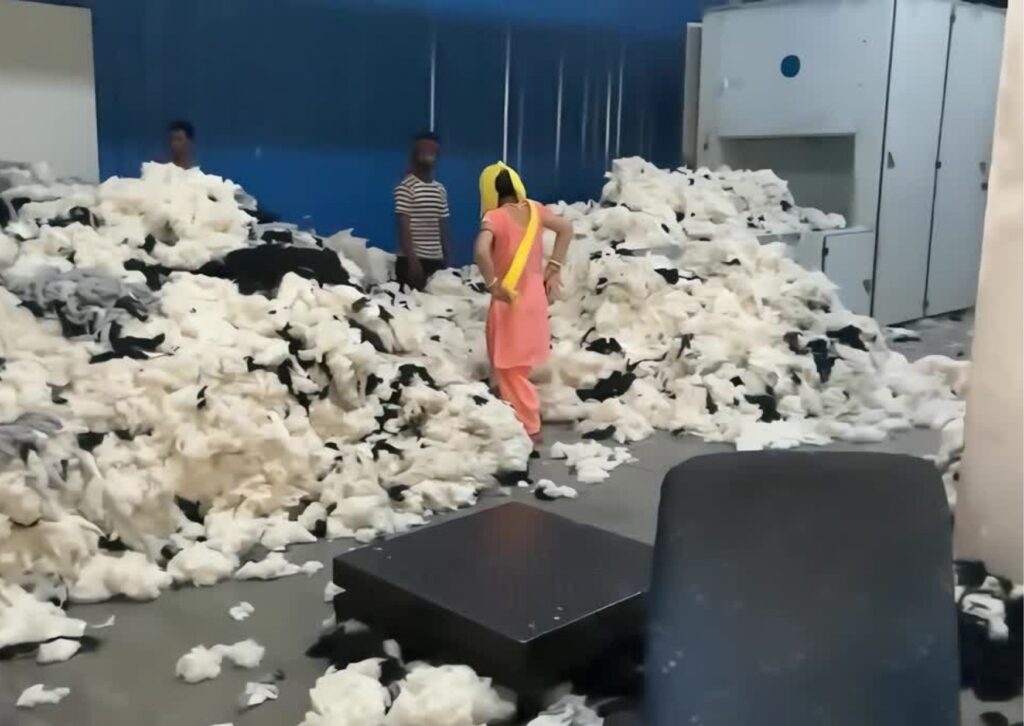
What Is Fibre-to-Fibre Recycling?
Fibre-to-fibre recycling is the process of converting textile waste back into new textile fibres that can be used to create fresh fabrics and products.
Unlike downcycling (where fabric becomes rags or insulation), fibre-to-fibre recycling preserves material value. It ensures that discarded textiles re-enter the production cycle instead of ending up in landfills.
Why Not Just Recycle Plastic into Textiles?
Plastic-to-textile recycling (like PET bottles → polyester fibre) is often promoted as sustainable. However, it solves plastic waste — not textile waste.
For textile manufacturers and fashion brands, the real challenge is:
- Factory cutting waste
- Surplus fabric rolls
- Rejected lots
- Production offcuts
If these materials are not recycled back into textiles, the industry continues producing virgin fibre — increasing carbon, water, and raw material use.
Fibre-to-fibre recycling directly closes this loop.
Why Fibre-to-Fibre Recycling Matters
1. Reduces Textile Landfill Waste
Millions of tons of textile waste are discarded annually — much of it pre-consumer.
Fibre-to-fibre systems ensure this waste becomes raw material again.
The world produces over 92 million tonnes of textile waste annually projected to reach 134 million tonnes by 2030.
2. Cuts Dependence on Virgin Fibre
Recycling fibres reduces the need for:
- Virgin cotton (water-intensive)
- Virgin polyester (petroleum-based)
- New dyeing & processing
This lowers environmental and operational costs for brands.
3. Supports ESG & Compliance Goals
Brands today face pressure to meet:
- ESG disclosures
- Circularity targets
- Sustainable sourcing mandates
Fibre-to-fibre recycling provides measurable impact — from waste diversion to recycled content integration.
Fibre-to-Fibre Recycling Process (Explained Simply)
Below is a simplified textile recycling workflow used in circular systems:
- Waste Collection
Pre-consumer textile waste is collected from factories and mills. - Sorting & Classification
Materials are sorted by fibre type, color, and blend composition. - Mechanical / Chemical Recycling
- Mechanical: Fabrics are shredded into fibre form.
- Chemical: Fibres are dissolved and regenerated.
- Fibre Regeneration
Recovered fibres are strengthened and processed for spinning. - Yarn & Fabric Production
Recycled fibres are spun into yarn and woven/knitted into new textiles. - Product Manufacturing
Brands use these textiles for garments, accessories, and industrial applications.
Research Insert: Add your internal process, machinery, or capacity details.
Fibre-to-Fibre vs Downcycling
| Aspect | Fibre-to-Fibre | Downcycling |
| Output Value | High | Low |
| Use Case | New textiles | Rags, stuffing |
| Circularity | Closed loop | Open loop |
| Brand ESG Value | Strong | Limited |
Business Value for Textile Brands
Implementing fibre-to-fibre recycling enables:
- Waste cost reduction
- New revenue from scrap
- Recycled content sourcing
- Circular product development
- Stronger sustainability storytelling
For manufacturers, it transforms waste management into value creation.
Building a Circular Textile Ecosystem
At Shrredit, we work with pre-consumer textile waste — converting surplus, cutting waste, and rejected materials into reusable fibre resources.
Our goal is simple: Keep every possible fibre in circulation.
Because the future of textiles is not just recycled — it is circular.