
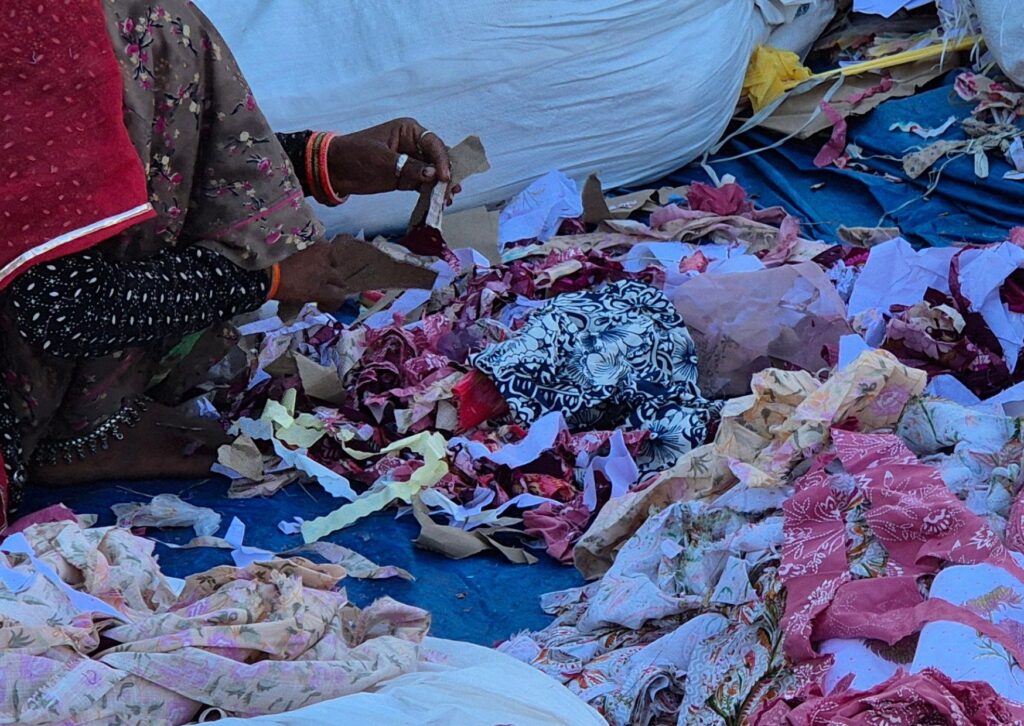
Recycling doesn’t fail in the factory.
It fails earlier—when cotton meets polyester, wool tangles with elastane, and usable fabric is tossed in with junk.
Once fibres mix, value evaporates. No machine—however advanced—can rescue badly sorted waste.
That’s the quiet truth the industry is finally confronting — and this exactly will redefine the recycling industry.
The Real Bottleneck
Most textiles are recyclable.
Only if they’re sorted right.
That’s the fragile hinge the whole system swings on.
Manual sorting has done heroic work for decades—but it breaks under pressure:
-
It’s slow and exhausting
-
Accuracy varies by person and by hour
-
Fibre blends fool the eye
-
Scaling destroys consistency
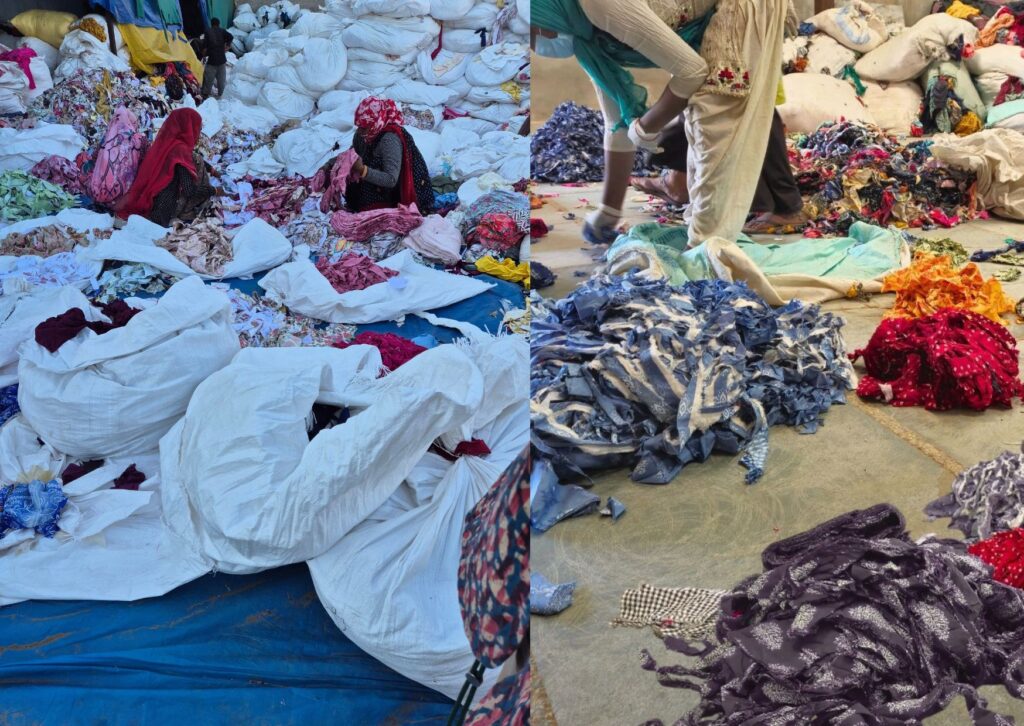
As volumes rise, small errors compound. Mixed inputs contaminate recycling streams, degrade fibre quality, and slash recovery rates.
So the problem isn’t recycling technology.
It’s what feeds it.
Why This Matters More in India
India is a global textile nerve centre: huge volumes, export-heavy supply chains, and mature recycling hubs.
At the same time, global brands want proof—of fibre purity, traceability, and circularity. Not promises. Evidence.
What’s been missing is precision.
Get sorting right, and everything improves:
-
Higher-value recycled outputs
-
Predictable, consistent fibre quality
-
Lower losses
-
Viable fibre-to-fibre recycling
Manual systems can’t deliver that reliability at scale. Technology can.
Sorting Is Becoming Infrastructure
Textile sorting is shifting from judgement to systems.
Modern setups combine:
-
Near-infrared spectroscopy
-
AI and machine learning
-
Machine vision and RGB imaging
-
Automated material handling
These systems identify fibre composition—including blends—in seconds, then separate by type and colour at industrial speed.
Buttons, zippers, labels? Removed upstream.
Cleaner inputs mean higher yields downstream.
At last, sorting is keeping pace with the complexity of modern textiles.
Hyperspectral Imaging: Seeing What Eyes Can’t
The biggest leap forward is hyperspectral imaging (HSI).
Instead of guessing by appearance, HSI reads chemical signatures—pixel by pixel. It works on dark, worn, coated, or blended fabrics where visual systems fail.
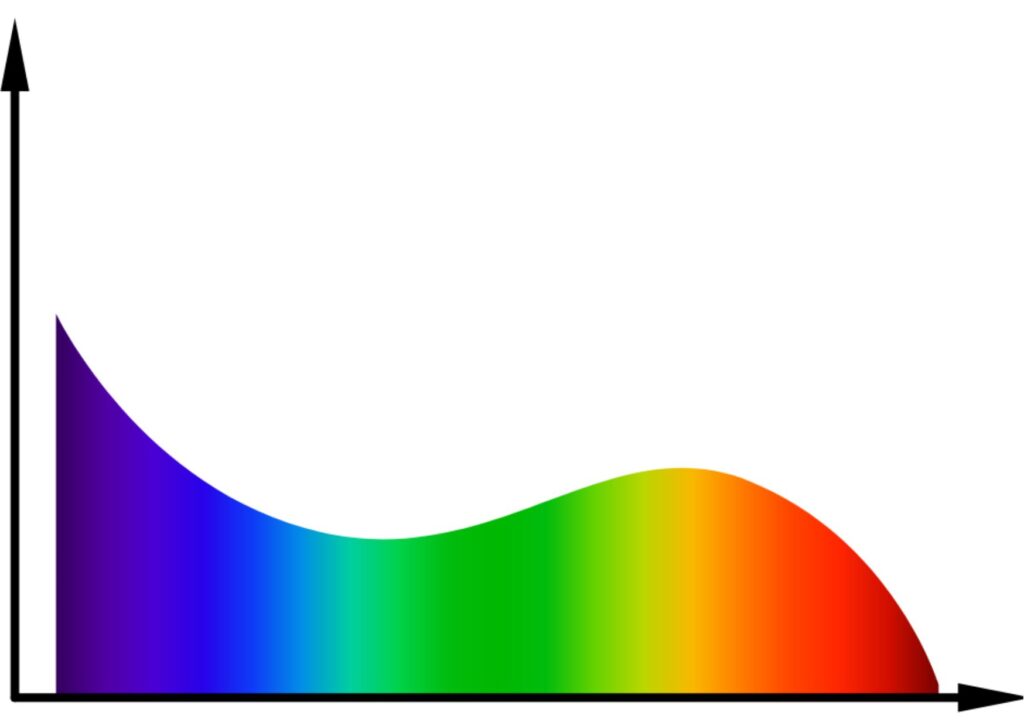
HSI reliably distinguishes:
-
Cotton
-
Polyester
-
Cotton–poly blends
-
Viscose
-
Wool
-
Polyamide
-
Acrylic
-
Elastane and other contaminants
This isn’t incremental accuracy. It’s a category change—and it directly translates into higher material value.
Automation Isn’t the Enemy of Jobs
Automation doesn’t replace people.
It removes chaos.
Machines identify and separate. Humans oversee, refine, and optimize. Reusable textiles are rescued earlier. Recycling-grade material reaches the right stream faster. Variability drops.
The system becomes predictable—and therefore profitable.
Regulation Is Raising the Stakes
EPR laws in the EU and US are forcing brands to own textile end-of-life. That pressure flows straight down the supply chain.
Indian recyclers will be expected to deliver clean, auditable outputs—whether or not the regulation is local.
Adaptation isn’t optional. It’s competitive survival.
The Bottom Line
Recycling lives or dies at the sorting stage.
Without precision, no downstream technology can save the system.
The future belongs to recycling operations that are:
-
Scanned
-
Classified
-
Separated
-
Tracked
Sorting is no longer a back-end task.
It’s the foundation of circularity.
Those who understand that early won’t just keep up—they’ll define what textile recycling in India looks like for the next decade.